Introduction
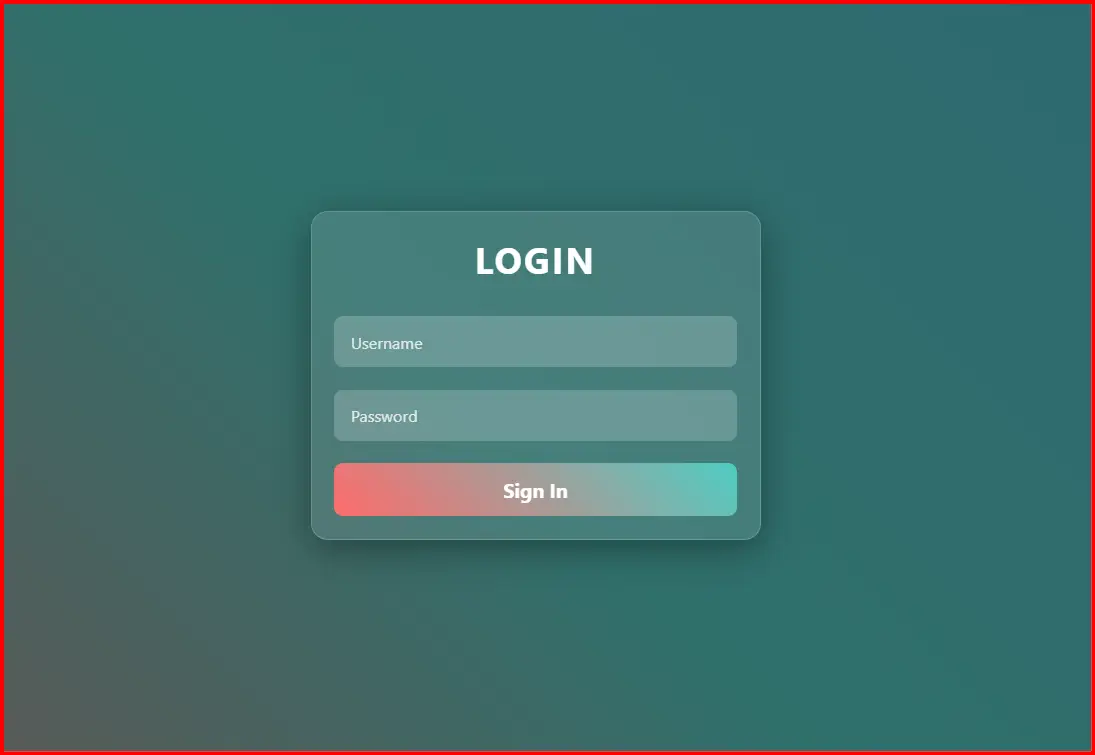
This project is a Dynamic Gradient Login Form that combines modern design aesthetics with smooth gradient animations and glassmorphism styling. The form delivers a futuristic and immersive user experience through animated color transitions, minimal interface components, and responsive adaptability for all devices.
Main Features
1. Dynamic Gradient Animation
- A continuously moving multi-color gradient background.
- Uses CSS keyframes to create a seamless animated gradient (
background-size: 400%for smooth looping). - Provides a modern and energetic feel, ideal for tech or creative platforms.
2. Glassmorphism Container
- Semi-transparent form container with blurred background and soft shadows.
- Adds depth and layering while maintaining focus on the login fields.
- Enhanced with rounded corners and subtle border effects.
3. Floating Label Inputs
- Labels rise and shrink when the user interacts with input fields.
- Helps users identify input purpose even after typing.
- Smooth animation transitions maintain a clean, modern aesthetic.
4. Responsive Design
- Automatically adjusts for all screen sizes.
- The form and animations scale gracefully on mobile, tablet, and desktop devices.
5. Interactive Sign-In Button
- Gradient button with hover effects and motion response (
transform: translateY(-2px)). - Creates tactile feedback for better user engagement.
6. Error Message System
- Displays validation errors dynamically.
- Automatically disappears after a few seconds using JavaScript timers.
- Helps maintain a clean look while improving usability.
7. Basic Validation Logic
- Checks for empty username and password fields.
- Includes demo credentials (
admin/password123) for testing login flow. - Easily customizable for integration with real authentication systems.
Technical Summary
- Languages Used: HTML, CSS, JavaScript
- Design Methods: CSS gradients, keyframe animations, glassmorphism, responsive layout
- Animation Techniques: Infinite linear-gradient movement and smooth transitions
- Functionality: Basic form validation, timed error display, and user interaction feedback
Conclusion
The Dynamic Gradient Login Form is a visually advanced yet lightweight login interface designed for modern web applications. Its continuous gradient animation, floating labels, and glassy interface make it ideal for tech startups, portfolio websites, dashboards, or creative platforms. The code structure is clean, adaptable, and ready for backend integration.
<!DOCTYPE html>
<html lang="en">
<head>
<meta charset="UTF-8">
<meta name="viewport" content="width=device-width, initial-scale=1.0">
<title>Dynamic Gradient Login Form</title>
<style>
* {
margin: 0;
padding: 0;
box-sizing: border-box;
font-family: 'Segoe UI', Tahoma, Geneva, Verdana, sans-serif;
}
body {
min-height: 100vh;
display: flex;
justify-content: center;
align-items: center;
background: #121212;
overflow: hidden;
}
.container {
position: relative;
width: 100%;
max-width: 400px;
padding: 20px;
background: rgba(255, 255, 255, 0.1);
border-radius: 15px;
backdrop-filter: blur(10px);
box-shadow: 0 8px 32px rgba(0, 0, 0, 0.37);
border: 1px solid rgba(255, 255, 255, 0.18);
z-index: 1;
}
.gradient-overlay {
position: fixed;
top: 0;
left: 0;
width: 100%;
height: 100%;
background: linear-gradient(45deg, #ff6b6b, #4ecdc4, #45b7d1, #96c93d);
background-size: 400%;
animation: gradientAnimation 15s ease infinite;
opacity: 0.5;
z-index: -1;
}
@keyframes gradientAnimation {
0% { background-position: 0% 50%; }
50% { background-position: 100% 50%; }
100% { background-position: 0% 50%; }
}
.login-form {
display: flex;
flex-direction: column;
gap: 20px;
}
h2 {
color: #fff;
text-align: center;
font-size: 2rem;
margin-bottom: 10px;
text-transform: uppercase;
letter-spacing: 2px;
}
.input-group {
position: relative;
}
input {
width: 100%;
padding: 12px 15px;
background: rgba(255, 255, 255, 0.2);
border: none;
border-radius: 8px;
color: #fff;
font-size: 1rem;
outline: none;
transition: all 0.3s ease;
}
input:focus {
background: rgba(255, 255, 255, 0.3);
box-shadow: 0 0 10px rgba(255, 255, 255, 0.5);
}
input::placeholder {
color: rgba(255, 255, 255, 0.7);
}
label {
position: absolute;
top: 50%;
left: 15px;
transform: translateY(-50%);
color: rgba(255, 255, 255, 0.8);
font-size: 0.9rem;
pointer-events: none;
transition: all 0.3s ease;
}
input:focus + label,
input:not(:placeholder-shown) + label {
top: -10px;
font-size: 0.75rem;
color: #4ecdc4;
background: transparent;
padding: 0 5px;
}
.login-btn {
padding: 12px;
background: linear-gradient(45deg, #ff6b6b, #4ecdc4);
border: none;
border-radius: 8px;
color: #fff;
font-size: 1.1rem;
font-weight: bold;
cursor: pointer;
transition: all 0.3s ease;
}
.login-btn:hover {
background: linear-gradient(45deg, #ff8787, #66e0d8);
transform: translateY(-2px);
}
.error-message {
color: #ff6b6b;
font-size: 0.9rem;
text-align: center;
display: none;
}
@media (max-width: 480px) {
.container {
margin: 20px;
padding: 15px;
}
h2 {
font-size: 1.5rem;
}
}
</style>
</head>
<body>
<div class="gradient-overlay"></div>
<div class="container">
<form class="login-form" id="loginForm">
<h2>Login</h2>
<div class="input-group">
<input type="text" id="username" placeholder=" " required>
<label for="username">Username</label>
</div>
<div class="input-group">
<input type="password" id="password" placeholder=" " required>
<label for="password">Password</label>
</div>
<button type="submit" class="login-btn">Sign In</button>
<p class="error-message" id="errorMessage">Invalid username or password</p>
</form>
</div>
<script>
const form = document.getElementById('loginForm');
const errorMessage = document.getElementById('errorMessage');
form.addEventListener('submit', (e) => {
e.preventDefault();
const username = document.getElementById('username').value;
const password = document.getElementById('password').value;
// Basic validation (for demo purposes)
if (username === '' || password === '') {
errorMessage.style.display = 'block';
setTimeout(() => {
errorMessage.style.display = 'none';
}, 3000);
return;
}
// Simulate login (replace with actual authentication logic)
if (username === 'admin' && password === 'password123') {
alert('Login successful!');
form.reset();
} else {
errorMessage.style.display = 'block';
setTimeout(() => {
errorMessage.style.display = 'none';
}, 3000);
}
});
</script>
</body>
</html>
HTML Login & Registration Forms – Parking / Management Systems & Modern UI Designs (Related to HTML Forms)
Login & Register Form for Park Management System with Dropdown:
This type of HTML form combines login and registration functionality for parking or park management systems. It often uses dropdown menus to switch between login and sign-up options in a single interface, making it more user-friendly and compact for web applications.
Read more: https://macronepal.com/blog/login-and-register-form-for-park-managmet-system-with-dropdown/
Dropdown Login Form for Parking System:
A dropdown login form allows users to select options like user type (admin/user) before logging in. This improves system control and is commonly used in parking management systems to separate different access levels.
Read more: https://macronepal.com/blog/drop-down-login-form-for-parking-system/
Dropdown Login Form for Park Management System:
Similar to parking systems, this login design uses dropdown selection to manage different roles such as staff, admin, or users. It simplifies authentication while improving system organization.
Read more: https://macronepal.com/blog/drop-down-login-form-for-park-managment-system/
Simple Login Form for Park Management System:
A basic login form built using HTML that includes fields like username and password. It is used for secure access to park management dashboards and is easy to design and implement.
Read more: https://macronepal.com/blog/simple-login-form-code-for-park-managment-system/
AI Style Glow Fullscreen Overlay Login Form:
This modern login form uses glowing UI effects and full-screen overlays to create an advanced and attractive design. It enhances user experience using CSS animations and visual effects.
Read more: https://macronepal.com/blog/ai-style-glow-fullscreen-overlay-login-form/
Glassmorphism Login Form:
Glassmorphism is a modern UI design style that uses blur, transparency, and frosted glass effects. It makes login forms look stylish and professional while maintaining readability.
Read more: https://macronepal.com/blog/what-is-glassmorphism-login-form/
Emoji Background Overlay Full Screen Login Form:
This login design uses emoji-based backgrounds with full-screen overlay effects to create a fun and engaging user interface while keeping login functionality simple.
Read more: https://macronepal.com/blog/emoji-background-overlay-full-screen-login-form/
Minimal Center Alignment Fullscreen Overlay Login Form:
A clean and minimal login form centered on the screen. It focuses on simplicity, proper alignment, and distraction-free user experience.
Read more: https://macronepal.com/blog/minimal-center-alignment-fullscreen-overlay-login-form/
Image Blur Focus Fullscreen Overlay Login Form:
This login design uses blurred background images with a focused login box in the center, improving visual depth and user attention on the form.
Read more: https://macronepal.com/blog/image-blur-focus-fullscreen-overlay-login-form/
Geometric Pattern Fullscreen Overlay Login Form:
A creative login form design that uses geometric patterns as backgrounds with overlay effects, giving a modern and structured visual appearance.
Read more: https://macronepal.com/blog/geometric-pattern-fullscreen-overlay-login-form/